What Makes One Orinda Home Outperform Another?
Sellers Jen Moeller September 30, 2026
Sellers Jen Moeller September 30, 2026
If you own a home in Orinda, you’ve probably done this.
A house around the corner sells for a big number and you immediately start doing the math.
Their house is 2,600 square feet. Mine is 2,800. They sold for $2.6 million. So does that mean mine is worth more?
Maybe.
But this is where Orinda gets interesting.
I can walk through two homes with similar square footage, similar bedroom counts and the same schools and know that buyers are going to experience them very differently.
One may have a smaller but beautifully usable yard. The other has an acre, but most of it is hillside. One has an easy driveway and great connection to the outdoors. The other has gorgeous views but a more complicated approach. One is dated but feels incredibly good. Another has a newer kitchen and bathrooms but a floor plan buyers struggle with.
Those differences don't always translate neatly onto a spreadsheet, but they absolutely show up in what buyers are willing to pay.
That is why I think one of the biggest mistakes an Orinda homeowner can make is assuming the value of their home can be determined by taking a nearby sale and applying its price per square foot.
Price per square foot is useful.
It just isn't the whole story.
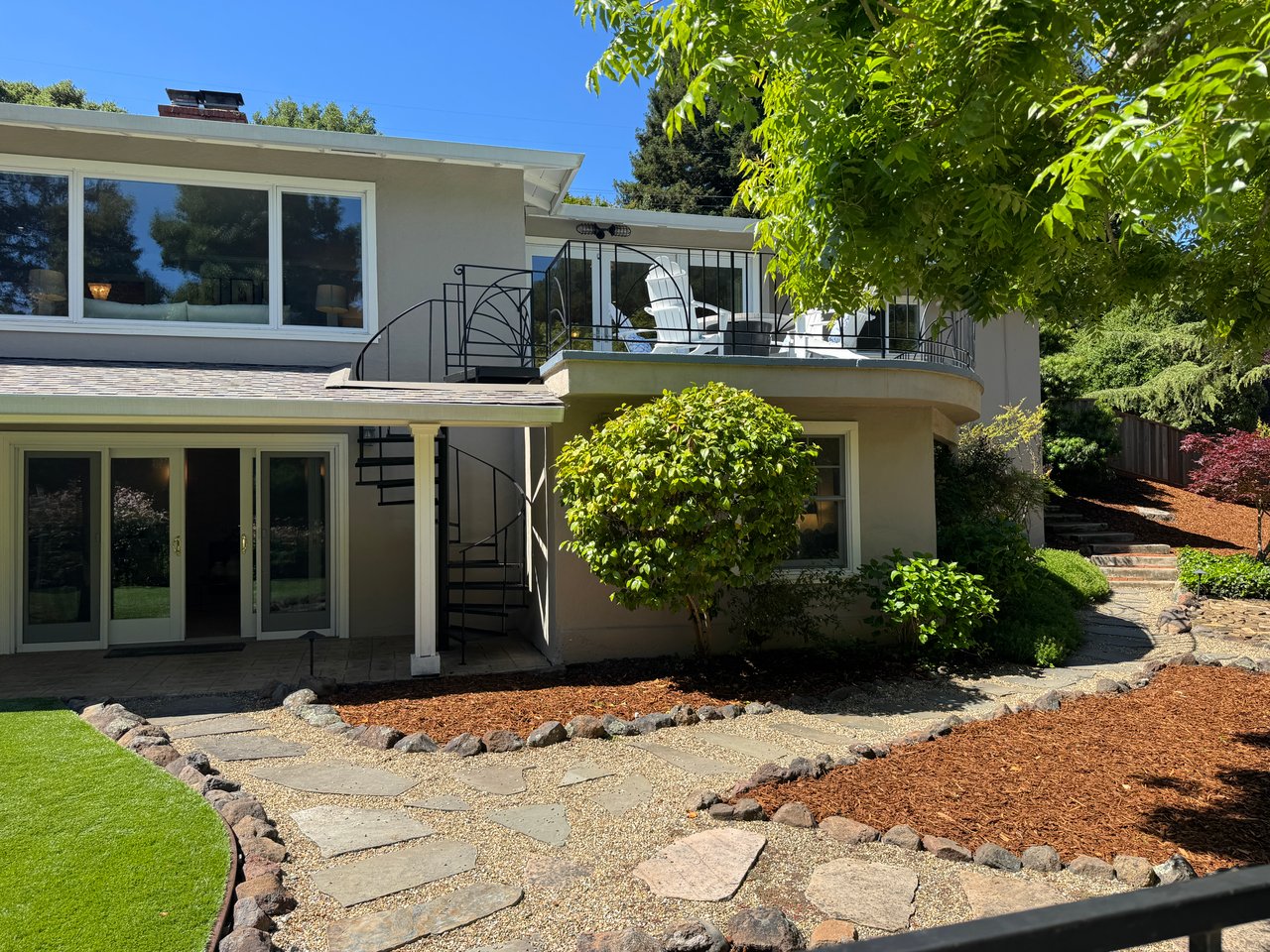
When I evaluate an Orinda home, I spend a lot of time looking outside.
Not just at the view.
I want to understand how the property actually lives.
Can you walk directly from the kitchen or family room into the backyard? Is there somewhere to have dinner outside? Is there level space to play? Does the yard feel private? Is there good afternoon sun? Where are the neighbors in relation to the house?
And how much of the lot can you actually use?
This is particularly important in Orinda because lot size can be deceptive.
A property can have substantial acreage on paper, but if much of it is steep hillside, buyers may value it very differently from a smaller parcel with a flat lawn, good privacy and an easy indoor-outdoor connection.
Neither property is inherently better. There are buyers who love a dramatic hillside setting and buyers who prioritize usable outdoor space.
The important thing is understanding which attributes your particular property has and which buyers are most likely to value them.
That is much more useful than simply saying, “It's on three-quarters of an acre.”
This is something I notice constantly when I'm touring with buyers.
The experience of a house starts before we open the front door.
How do we get there?
Is the driveway steep? Can two cars pass? Is there somewhere for guests to park? Can you turn around easily, or are you backing down the driveway? How many stairs are there between the car and the kitchen?
None of those things automatically makes a property undesirable. Some spectacular Orinda homes have steep driveways.
But buyers start imagining daily life almost immediately.
They think about teenagers learning to drive. Grandparents visiting. Getting groceries inside. Having friends over. Eventually reselling the house.
They may never tell me, “The driveway reduced my perceived value of this property.”
Usually they just say:
“I don't think this is the one.”
Understanding those quieter reactions is an important part of pricing an Orinda home correctly.
Spend enough time looking at Orinda houses and you start paying attention to where water goes.
We live in hills. We have older homes, retaining walls, creeks, slopes, drainage systems and properties that have been modified over many decades.
So if I see erosion, staining, cracking, a hillside above a structure, an unusual drainage pipe or evidence that water is being redirected around the property, I want to understand it.
That does not mean every crack is structural or every hillside needs an engineer.
It means I would rather ask the question before we put a home on the market than have the buyer ask it for the first time during escrow.
Sometimes the answer is simple.
Sometimes we need a drainage contractor.
Sometimes it makes sense to get an opinion from a structural or geotechnical professional.
And sometimes we learn that something that looked concerning really isn't.
The point isn't to go looking for expensive projects.
The point is to replace uncertainty with information.
This is one of the more important things I've learned from watching buyers.
Imagine they walk into a house and see an older roof, some dry rot, dated electrical, a sewer question and evidence of past drainage work.
Maybe none of those things is particularly dramatic.
But buyers don't necessarily experience them as five separate line items.
They experience them as:
“This house could be a lot of work.”
And the number they mentally subtract can be considerably larger than what some of those repairs would actually cost.
That's why I don't start preparing a seller's home by asking:
What can we renovate?
I start with:
What is keeping a buyer from seeing the value that's already here?
That leads to very different decisions.
There are homes where doing substantial work before selling makes sense.
There are plenty where it doesn't.
If you have an older kitchen that is clean, functional and works with the house, I may tell you to leave it alone.
I'd rather put money into something that materially changes how buyers experience the property.
That might be refinishing the floors.
It might be paint.
It might be removing oversized furniture that is making a good room feel small.
It might be improving landscaping around the entry.
It could be replacing a few distracting light fixtures.
Or it might be addressing a maintenance item that every buyer is going to notice.
Sometimes the right recommendation is to do very little.
Preparing an Orinda home for sale shouldn't be a beauty contest.
It should be an ROI exercise.
I think this distinction saves sellers money.
If a bathroom is 20 years old but perfectly serviceable, remodeling it may not change the eventual sale price enough to justify the investment.
But if the first thing buyers see when they walk into the backyard is obvious dry rot, that relatively small item may create an outsized impression that the property hasn't been maintained.
Those are the things I want to identify.
Where is money actually going to change perception?
Where will it improve photography or the experience of walking through the house?
Where will it make a buyer feel more confident?
And where are we simply spending money to make something newer?
Newer isn't always more valuable.
If I'm concerned about a sewer line, I'd rather understand the sewer line.
If the roof is older, let's understand its condition.
If something about the drainage catches my attention, let's determine whether there is actually an issue.
If additions or conversions raise permit questions, let's understand what the records show.
That doesn't mean we automatically fix everything we discover.
A seller inspection is information, not an agreement to undertake every recommended repair.
Once we know what we're dealing with, we can make an informed decision about whether to repair it, disclose it, price around it or get additional information.
I'd much rather have that conversation before buyers are standing in the house with their inspector.
This has become increasingly relevant in Orinda and other parts of the East Bay.
Buyers may think about insurability earlier in the process than they did several years ago, particularly when they are looking at homes in higher fire-risk areas.
That doesn't mean every Orinda home has an insurance problem.
It does mean I don't think sellers should treat insurance as something that only becomes relevant after an offer is accepted.
Vegetation, defensible space, roof condition and other property characteristics can become part of a buyer's due diligence.
If there is information we can reasonably understand beforehand, I'd rather know it.
Again, the goal isn't to create fear around a property.
It's to eliminate avoidable surprises.
This is probably where seller expectations and actual pricing strategy diverge most often.
Everyone remembers the extraordinary sale.
I do too.
But then I start pulling it apart.
Was that lot flat?
Did it have a pool?
Was it remodeled?
How private was it?
What was the floor plan?
Where was the primary bedroom?
Did it have an ADU or separate office?
How was the indoor-outdoor connection?
Was it on a quiet street?
Was there a view?
How difficult was the driveway?
And what else was available when it sold?
That last question matters.
The closest sale geographically isn't necessarily the home buyers will compare with yours.
A buyer with $2.5 million to spend isn't saying, “Show me the closest comparable sale.”
They're looking at everything they can buy for roughly $2.5 million.
That is the competition that matters.
I don't really think of Orinda as one housing market.
Glorietta has its own nuances. So do Sleepy Hollow, Del Rey and Orinda Downs. Homes closer to downtown and BART offer a different lifestyle from properties tucked farther into the hills.
And even those labels don't tell the whole story.
One part of a neighborhood may have flatter lots. Another may feel more secluded. A house may be incredibly convenient to school but have more traffic at certain times of day. Another may feel wonderfully private but add time to the morning commute.
Sometimes two houses only a few streets apart live completely differently.
That's why broad Orinda market statistics are useful for understanding direction, but much less useful for determining the value of one specific property.
Your house isn't the average Orinda house.
The job is figuring out exactly where it sits in the market.
A house can photograph beautifully and have expensive finishes, but buyers still have to live in the floor plan.
Where is the kitchen in relation to the family room?
Can you see the backyard from the main living areas?
Where are the bedrooms?
Does the primary suite feel private?
Is there somewhere to work from home without sacrificing a bedroom?
Can the house adapt as children get older or parents come to stay?
Sometimes a house that hasn't been recently remodeled wins because its underlying layout simply works better.
That's why I want sellers to understand the strengths they already have before deciding what needs changing.
Determining what I believe a home is worth and choosing where to list it are two related but different decisions.
List price has a job.
It determines which buyers find the house online.
It affects which properties buyers compare it with.
It can create urgency, or remove it.
And it sends a message to the market.
There isn't one pricing strategy that works for every Orinda home.
Sometimes positioning below expected value makes sense because the property is likely to generate broad interest and competition.
Sometimes a more direct pricing strategy makes more sense.
What I don't like is underpricing simply because “that's what we do in the Bay Area.”
There should be a reason behind the number.
Your home doesn't come onto the market in isolation.
I want to know what a buyer will see immediately before or after they see yours.
If there are three compelling homes competing for the same buyer that week, that's important.
If there is almost nothing available in your price range, that's important too.
I also pay attention to homes that haven't hit the public market yet when I can.
Sold properties tell us what buyers did.
Current and upcoming inventory helps us understand what buyers are deciding between now.
You need both.
Some homes simply make people want to stay.
There is a sunny corner for coffee in the morning.
The kitchen opens onto a patio where you can imagine having friends over.
The backyard feels private.
There is somewhere for the kids to disappear.
You look out a bedroom window and see hills instead of another house.
The property feels peaceful without feeling isolated.
These aren't frivolous details.
They're often the reason a buyer starts emotionally fighting for a house.
My job when I'm preparing an Orinda home for sale isn't just to identify what needs fixing.
It's also to identify what is unusually good about the property and make sure buyers don't miss it.
Because the best result doesn't necessarily go to the biggest house, the newest kitchen or the largest lot.
It often goes to the home where the property, preparation, pricing and timing come together — and buyers understand why that particular house is worth stretching for.
I don't think the first conversation should be about staging or what list price to put on Zillow.
It should start earlier than that.
I want to walk the property, understand what makes it different, identify anything worth investigating and figure out where — if anywhere — it makes sense to spend money before selling.
Sometimes that results in a fairly substantial preparation plan.
Sometimes my advice is surprisingly simple.
Either way, the goal is the same: make thoughtful decisions about your home before you're making them under the pressure of being on the market.
If you're considering selling an Orinda home — whether that's soon or still a year or two away — I'm always happy to walk through it with you and tell you what I see.
Jen Moeller
Compass
DRE #02147681

Lafayette, Moraga, Lamorinda, Local Lifestyle, Community History
How a proposed freeway became one of Lamorinda's most beloved walking and biking trails
Seller Resources, Home Valuation, Lamorinda Real Estate, Orinda, Lafayette, Moraga
Why two similar homes can have very different values in Lamorinda—and what really matters when determining what your home is worth.
Selling a Home, Seller Resources, Lafayette Real Estate
A local Realtor's advice on preparing your Lafayette home for sale without spending money where you don't need to.
A Local Look at What Buyers and Sellers Should Know in Lamorinda
Rheem Valley Shopping Center Moraga , Grocery Outlet Moraga, Chipotle Moraga, Moraga redevelopment, living in Moraga

Orinda, Downtown Orinda, Lamorinda, Local Lifestyle, Restaurants & Dining, Community News, Living in Orinda
Downtown Orinda Restaurants & What's New in 2026
Orinda Neighborhood Guides East Bay Real Estate
What to know about Glorietta homes, schools, location, and buying or selling in this part of Orinda.
Selling a Home Orinda Real Estate Seller Resources
A practical guide to deciding which repairs, inspections and updates are worth doing before you sell your Orinda home.
Market Insights Lamorinda Orinda Lafayette East Bay Real Estate
New Census data shows a striking shift in where California’s highest-income households are concentrated—and it helps explain some of what we’re seeing in the Lamorinda… Read more
Real estate decisions often start long before you're ready to make a move. If you're thinking about what might be next, I'd love to hear from you.
Jen Moeller | CA DRE# 02147681
Compass California II, Inc.
(415) 215-9105
[email protected]
3595 Mt Diablo Blvd Ste 200 Lafayette, CA 94549